18 May 2012

Always at the crossroads: Listening to crickets as modern media evolves

Prompted by reading a few skeins of Twitter abuse hurled toward film crickets who are tweeting from Cannes 2012, I went looking for the phrase "pecked to death by ducks." I found this article, originally published in Newcity in a slightly different form in February 2007 (and not online), and I almost cringe at the thought of re-reading this snapshot of a moment that passed over five years ago.

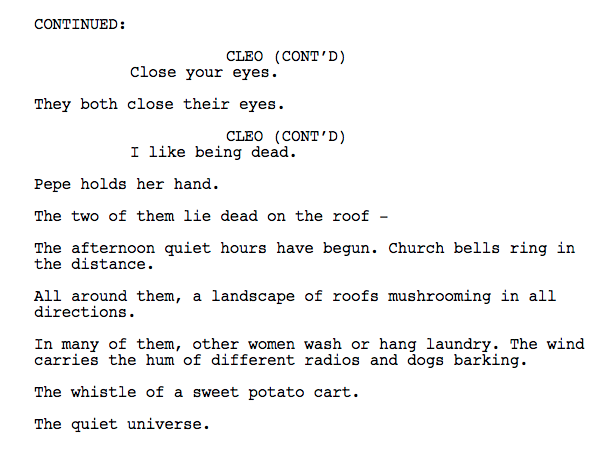
MEDIA AND MARKETING STRATEGIES SHIFT BY THE DAY: a prime example that affects how one writes about movies has been the increase in Tuesday night screenings for the bulk of Chicago film critics of movies like Breach and David Fincher’s Zodiac. (Paramount was kind enough to send out a creepy reproduction of “an authentic Zodiac letter scanned directly from evidence.”)

Are the films bad? In these cases, no. (The Thursday night screenings of Reno: 911: Miami may tell another story.) What it changes is the ability for a reviewer to be part of the conversation on the opening weekend. The critic Robin Wood made a simple distinction last year between a reviewer and a critic: "The reviewer writes for those who haven't seen a film, telling readers whether they shouldn't and offering a fairly clear idea of what the film is and does; the critic assumes the reader has seen it, making a plot synopsis superfluous, and attempts to engage him or her in an imaginary dialogue about its content, its degree of success, its value. The great literary critic F. R. Leavis summed up very succinctly the ideal critical exchange: 'This is so, isn't it? ' 'Yes, but...'"
Inadvertently, the role of the writer who covers the movie beat to champion a small or strange film and have an impact on its opening week attendance could tail off to nothing if these practices were to become widespread, and yet without the commercial consideration, a fresher form of “criticism” could emerge. But that’s Pollyannish, leaving out as it does what’s happening to print media, where dailies and weeklies alike are cutting space and migrating extended content to the Internet. (Still, I have to admire the Toronto critic who left a Thursday night screening of Ghost Rider and immediately composed his notice on his BlackBerry.)

Even a couple of hours with your trigger finger working the keyboard can convince you, via the internet, of the death of many things large and small, and that would encourage the genre of aware and worldly film criticism. "Suicide by paying attention," a colleague called it, after sharing a barrage of blogs that held a heavy baggage of contempt, contumely and cultural discontinuity. Read the comments section of any site with 4,000 hits a day and it’s the sort of slow death that the journalist Tim Cahill memorably describes as being "pecked to death by ducks."


To pick one shining, contrary example, the great film analysts David Bordwell and Kristin Thompson do exemplary, extensive work describing the elements of filmmaking they’re fixed upon. Yet two pieces shone for me while considering this subject. The first is a passage from the poet Mark Doty’s “Still Life with Oysters and Lemon,” after three separate friends in one day reported their astonishment with Children of Men (each wholly unaware of the myriad forms of spite piled upon Alfonso Cuarón’s masterpiece online): “The most beautiful still lifes are never pristine, and herein lies one of their secrets. The lemon has been half-peeled, the wine tasted, the bread broken; the oysters have been shucked, part of this great wheel of cheese cut away… Someone has left this knife resting on the edge of the plate, it’s handle jutting toward us; someone plans, in a moment, to pick it up again. These objects are in use, in dialogue, a part of, implicated. They refused perfection, or rather they assert that this is perfection, this state of being consumed, used up, enjoyed, existing in time… [S]omething of the imperfect, the quickly passing, the morning meal with its immediate pleasures has been imported into the realm of perfection, into the long, impersonal light of centuries.”
There is a thrilling analogue to what I love about the potential of filmmaking for the transporting moment; of the practice of criticism, a fourteen-page interview with the exceptionally insightful Australian writer Adrian Martin recently appeared online, entitled “Responsibility and Criticism.” It's the most lucid and bracing exploration I've read in some time about what ought to be going on before and after the lights go down on the professional film cricket. "[W]riting about film is always about capturing fugitive sensibilities as they form and die, at a very rapid rate, within the cultural sphere… [N]o film is truly old, or in the past! Every cinephile should have the experience of watching a silent film. I had this experience watching some Jean Epstein films recently-and suddenly feeling confronted with something that is still, today, newer and more modern than we ourselves are as spectators. There is a good, simple reason for this: the cinema is always a laboratory, a field of experimentation: experimentation with image, sound, performance, gesture, light, colour, music, rhythm, storytelling, etc. No experiment is ever exhausted, and no aesthetic or cultural problem is solved for all time. So, when we return to old films, we therefore see that they are completely contemporary to us and our concerns, if we are open to the traces of experimentation in them-there are always new ideas in old films. I do not regard the 'cinema of the past' as something neat, clean, classical, canonical. Cinema is always 'at the crossroads', at every moment of its existence, and so are we.”

And in breaking news, Ron Howard intends to remake Michael Haneke’s serenely savage critique of representation and the bourgeoise, Cache. And so on and so forth, and so on and so forth, Et Cetera, Et Cetera. Death comes slowly.

[Here's the PDF of the Adrian Martin article.]

09 February 2012

Star Wars: The Phantom Menace (17 May 1999)

What if it had been good


What if it had been a movie? 

Star Wars Episode I: The Phantom Menace is the product placement of all time, the runestone, the grail, the altar upon which billions of dollars of cash will be placed in the next few weeks, and its surge of activity in the economy, coursing from fan-hand to Hasbro or Galoob bank, from T-shirt sweatshop to Lucasfilm coffers, may be more instrumental in lubricating the economy than any amount of e-commerce day-trading in Internet stock ever could. The Force is money. The movie is crap. That is, unless you're about 5 years old, and still enjoy hearing lines like, "Aw, Jar Jar Binks, you in deep doo-doo now!"

The bigs have weighed in—Rolling Stone, USA Today, the New York Daily News, Time, Newsweek, Variety, the Hollywood Reporter—mostly conceding that Star Wars Episode I: The Phantom Menace is platinum-hearted, product-pandering childsploitation of a low and monotonous order. (One hopes the small voices will pipe up against the dark side of the Force, as well.) One could criticize Star Wars Episode I: The Phantom Menace for the obvious that's there for all with eyes to see—that it's a feature-length animated cartoon with humans dropped in (for modest adult identification), poorly acted, lurchingly paced, and with dialogue on a level a notch or two above "Teletubbies."

But that misses the point. The movie doesn't matter. The jam-packed style of the film serves only to motor a merchandising blowout that has already outgrossed many small nations and most religions. But who needs to start a religion when you've got a billion-and-a-half dollars in merchandising revenue banked before a single ticket was sold? If we cannot find faith, we can at least download directions to the mall, and find Star Wars products to fill the emptiness in our lives and basements.

In a new biography of the late French film director François Truffaut, his once-friend and fellow director Jean-Luc Godard snipes at him with a put-down along the lines of, "Ah, François. Businessman in the morning, poet in the afternoon." On the evidence of Star Wars Episode I: The Phantom Menace, the one-time director of THX-1138 and American Graffiti no longer has poetry on his mind, only the merch: another cavil toward the notion that Lucas, the man, is a storytelling "genius."

In finding products to peddle, Lucas signs works the origins of which are more convoluted than the usual film production or the workshops of antiquity where painters would sign the work of their students. With immense resources at his disposal, Lucas can dragoon vast numbers of young and gifted talents to conceive of creatures, vistas and machinery that can then be absorbed into the Lucas corporate—sorry, story—structure as surely as Microsoft shovels up "intellectual property."

As with the appropriation of religious iconography, including the confounding suggestion that Annakin Skywalker is a parallel creature to Jesus Christ, this opportunistic mulching of style results in no style, only a very remunerative corporate compost that is little more than mush-mouthed New Age wishy-washiness. Instead of a sense of wonder, we're offered a sense of bewilderment.

What about the video game-style structure? Not only the obvious, the long, dodge-the-obstacles pod race across the desert, but the condescending, puzzle-piece pseudo-educational story structure that mimics Lucasarts video games with titles like "Monkey Island." A Jedi Knight's spaceship fails, so a part must be found. The junk dealer won't take Federation money, so a barter must be made. The barter introduces the Knight to Annakin, and another barter and a bet set up the pod race. Worse than the diagramming of a sentence, this structure follows the format of game "interactivity" to a dulling degree.


The casual racism is shocking as well. Samuel L. Jackson is shown as the only visible human in a Council meeting amid rubber puppets and computer-generated creatures. What's more exotic in the universe than a powerful black man? Or what about Watto, the junk dealer, a hook-nosed and vaguely Middle Eastern Shylock who owns the young Annakin? Or the fish-headed bad-guy ambassadors who speak in Charlie Chan cadences; or the film's central character, Jar Jar Binks, who speaks in motor-mouthed Jamaican-patois Stepin Fetchit "me no there go" voice. There's a line where a creature calls Annakin "a credit to [his] race"; with a glimmer of wit, the nasty line of yore would have been revised to "a credit to your species."

There's another racial element to Star Wars Episode I: The Phantom Menace: As our eyes scan the Big Daddy Roth-style rat finks that litter the crowd scenes, we have to wonder about the first Force-ful intergalactic ethnic cleansing: Where are the Ewoks, those gentle, fun-loving little characters. Banished to the back of the merchandising shelf?

What if it had been good? No chance.

That happened somewhere else, in some galaxy, far, far away.

[Appeared in a slightly different form in Newcity, 17 May 1999.]

02 January 2012

The Same River Twice: Terry Gilliam and 12 MONKEYS


Terry Gilliam travels between modern worlds in 12 Monkeys

Snow flocks the rotten gray sky. Every airline's flights have been canceled or rearranged, and Terry Gilliam, urgently required in a distant city this evening, once again feels dislocated. We'll have to talk in his car on a rush to O'Hare. Gilliam, armed with his violently infectious giggle, seizes on the stretch limo as a metaphor for time travel's meaning in 12 Monkeys, his marvelously rich, complex new movie, easily one of the best of 1995.
The 55-year-old Gilliam is as manic as a child. "We've got a premiere tonight in L.A. This weekend in New York, I did over seventy-five interviews. It's bizarre. Technology just makes us more confused, since it opens up so many more doors." The car reminds Gilliam of how Cole, Bruce Willis' time traveler, is shunted from the desolate future, where a virus has killed ninety-nine percent of mankind, to 1996 where he searches for a renegade animal rights group that calls itself "The Army of the 12 Monkeys." "We get in the chrysalis, then we get in the steel tube! Which is the point! That world is all around us, but why don't people recognize it?"
Terry Gilliam prestige
The script, written by David and Janet Peoples (David wrote Unforgiven and co-wrote Blade Runner, is inspired by Chris Marker's melancholy 1964 SF short, La jetee, and draws its central imagery from it. Like Gilliam's other films, the world of 12 Monkeys is simultaneously retro and futurist, a documentary of the universe of found objects clattering in Gilliam's sensibility. There's a lovely interlude using clips from Hitchcock's Vertigo, with Cole astutely observing to sympathetic psychologist Kathryn Reilly (Madeleine Stowe) how strange it is that "movies stay the same, but you  change." I bring up the Southern aphorism about never being able to step in the same river twice, and Gilliam nods. "Yeah. It's like being asked to compare my work with Python to what I do now. I suppose there's still a certain sur—surreality—well,  surrealness about it, using the same kind of juxtapositions, of scale, time, space. I think the foot at the beginning shows the same kind of fatalism. Whatever you do, there's something you're not going to escape from." He pauses, then mutters, "It seems a very long time ago that guy did those animations."
Cole's a convict whose reprieve will come only if he allows himself to be flung back and forth in time. He eventually agrees with those who think he's mad, and decides it's best to stay in 1996 with Kathryn. Again, Gilliam works the parallels to his life. "After Fisher King, I was spending a lot of time back and forth between the States and London. I have a lot of memories of New York and other places, and I go back to them, it's almost as if the intervening years had never happened. Just at the moment I think I'm one person and I have this life worked out! I used to go on holiday, Morocco, Greece, anywhere, and throw myself into those worlds. Then I'd come home and there was this awful feeling as I walked up the stairs to my apartment, that the apartment just started, with each step, clunk, another bit of the apartment, clonk,  another piece blotted a bit of Morocco. by the time I had opened that door, Greece or Morocco had vanished forever and the apartment had taken me over again. It's always been like that, and it drives me crazy."
Taken for being crazy, Cole is incarcerated in a mental hospital, where he meets Stowe and Jeffrey Goines (Brad Pitt), a loony rich kid escaped from a Tex Avery cartoon. Pitt's astonishing, practically bouncing off the walls in all his scenes. "I met Brad and I really like him, his earnestness and determination. Then as soon as I did that, I realized we had made a huge mistake and we were doomed! But months later, Brad worked his ass off and it shows. He's fantastic. We were the beneficiaries of being on the rebound of him being the sexiest man in American, which he hates. All those twitches and mannerisms? He really worked for it."
Gilliam also admires Willis' work. "I've seen the film, what, fifty or sixty times? The more I watch, the more impressed I am with Bruce. He's so understated. There's a lot of people who don't like Bruce because of all the macho, smart-ass films he does. My big fear was that I thought people who would really like this film won't go because it's got Bruce and Brad in it, they'll think it's that kind of film. And the people who go to see Bruce and Brad will be disappointed because it's this kind of film. I'm dying for it to open and see what the reality is!" Gilliam giggles, then resumes his earlier train of thought. "We're just surrounded by this stuff. Of all this information that surrounds us, what bits are important, what applies to me, which can I ignore? And nobody's really certain, so you're kind of nervous the whole time. That key bit, the answer, the meaning of life might have—fweep!—gone by when you weren't looking. I think instead of informing us it's turned us into even more neurotic people. Mobile phones! In the past, when you rented a car, you couldn't contact the known world from that car. So what you wind up doing, of course, is calling friends, whatever, then the phone conversation is constantly interrupted by bad connections or you're under a bridge. So then you become more neurotic wondering what you lost in the conversation. Before, driving a car was just one of the great things, you were free."
On the median, an O'Hare-bound train thunders past. I mention how Gilliam's use of contemporary, rundown Philadelphia locations is reminiscent of Godard's Alphaville. "Christ! Alphaville is so simple," Gilliam says. "But Godard caught an atmosphere with no money. I admire that film tremendously. I wish I could be that restrained and restricted." But 12 Monkeys is a more complex film. "Not that you would know it from the questions I get. 'Is it a hopeful ending, Terry?' I get asked. What I think it is, is a transcendent ending, it's very beautiful. I get teary, it just gets me, there's something very beautiful that happens there. Oh it's a downer, oh it's a happy ending, that's the choice? That's how films have to end, it's binary, it's on or off? That's nonsense. That's the vocabulary you have to deal with in most stages of filmmaking, from studios to critics and interviews. It's so limited. I've got this whole world [we've constructed] to deal with and it's down to this? There are interviews where you talk about Brad and Bruce's butt. After all that effort, that's what we talk about?"
I suggest, "Ambiguity—is it good or evil?"
"Each one of us who makes movies has some kind of impact. Isn't that what It's a Wonderful Life is about?" Gilliam giggles. "There's something about the human spirit that seems so irrepressible no matter what you throw at it, that always astounds me, so in that sense, yeah, it's there. An awful lot of the time I get very depressed, but it doesn't matter. Life's a pretty good ride to go on, however bad or silly it gets," he says as the car pulls up to the curb. 

Published in another form in Newcity, 4 January 1996.

19 December 2011

REPRISE (May 28, 2008)

The Speed of Thought: Re-viewing “Reprise” 

 “Reprise,” Joachim Trier’s marvelous, novelistic, essayistic, bold, assured debut feature, opened last weekend, and I was dying to see it again with an audience. Sunny Saturday afternoon and a surprising sixty or so people were at Landmark Century, including a friend only a few years older than the 23-year-olds who comprise the characters of “Reprise,” and whose life is also wrapped up in music and letters and the world that is girls. Only afterward did I discover The Reader hadn’t reviewed the movie at all (in a week where its film feature advocating the stealing of an independent filmmaker’s work, which I haven’t seen written about any commercial releases from companies that advertise in their film section). I didn’t want to read Ebert’s review after seeing it’s a two-star notice; it might be as wrong-headed as his writing about Kiarostami (one star for “Taste of Cherry”), or it could be utterly convincing; I’ll stick with my pleasure in “Reprise” for now.

But I was gratified by the audience and with my friend’s reaction afterward: this Norwegian movie from 2006 is more here-and-now than any movie I might be able to see this week. “Reprise,” I wrote last week, is such a vivid, bravura, gorgeous, funny, sad, beautiful, smart (but never smug) display of cinematic fireworks, that it’s a terrible sign of the state of American film-going that it almost never saw U.S. screens. Trier and I spoke on the phone recently about some of the film’s many virtues, including a willingness to hark back to movies like Alain Resnais’ masterpiece, “Last Year at Marienbad,” which recently played the Music Box.

This movie is such a bundle of energy, a burst of exuberance, I tell Trier admiringly. “Thanks! Yeah, we’ve kind of looked at it as a bit of a scrapbook film,” the 34-year-old writer-director says. “We didn’t want to restrict ourselves too much, we wanted there to be chaos and digressions and allowed ourselves to do this because of the age of the characters and their types.” “Reprise” is thinking and digressing and contradicting itself at every turn: it’s a consciousness built on all its characters’ subconscious, like a good novel. “That’s something that both me and my co-writer [Eskil Vogt] are very interested in exploring. This idea, which is a ridiculous idea, that you can’t show thought in cinema! I think it’s rather weird. Certainly there are ways of trying to show associative, or associations of thought patterns in film. It’s something that we just find fun to explore. With ‘Reprise,’ I think we’ve gone the furthest in a way, trying to show that what we imagine, or what we wish for, or what we wish we should have said, or that thing that keeps nagging us from the past, all of that is part of several of the movements we are in. We were trying to play around with that.”

 There’s a sequence that’s emblematic for me, when the writer who’s published first is walking down the street with a woman and the voiceover observes she was the only person he ever knew who had The Ramones on vinyl and then he gets hit by a car. Three different layers of cognition going on there, and one of them is, I’m not paying attention, I’m listening to her and looking at her and thinking about her vinyl, so I’m going to walk out in traffic.

“Yeah, yeah, true,” Trier agrees. “There are several layers. We like to have sort of a [multiple] perspective on things without being too pretentious about it. I guess a lot of this was trying to use devices—I hate ‘device,’ because it sounds like a mock-contrived approach to storytelling, and hopefully our voiceover is quite integral to what’s going on—but we certainly wanted to have a multilayered, a multifaceted approach to this, in terms of having a narrating third person, almost authorial voice going on. And also at the same time using off-voice, which is closer to thought in a way, almost as if people are thinking back at other moments while they are talking to each other. For instance, [the couple] in the café, they speak about the past, they walk in the park, suddenly we understand the park is in the present as well, we’re not quite sure what was said, but hopefully we get a sense of their reality.”

Trier admires Resnais, but he says, too, that “Andrei Tarkovsky is a big inspiration. The way that he describes in his book, ‘Sculpting in Time,’ his approach to reality is as if you… if you walk down a street and see a man, and you try to re-create that, thinking of reality as an objective truth and put the camera where your eyes [were], you film a man, an actor that looks like the man, you will capture nothing. Because what you have seen is your own thought process. You have seen that the man might have resembled your uncle or an old friend; you might have had a fight with your girlfriend that made you sad as you looked at him. I mean, there are millions of other moments present in that moment. To try to make those connections and contextualizing things is just as important as what is actually seen.”